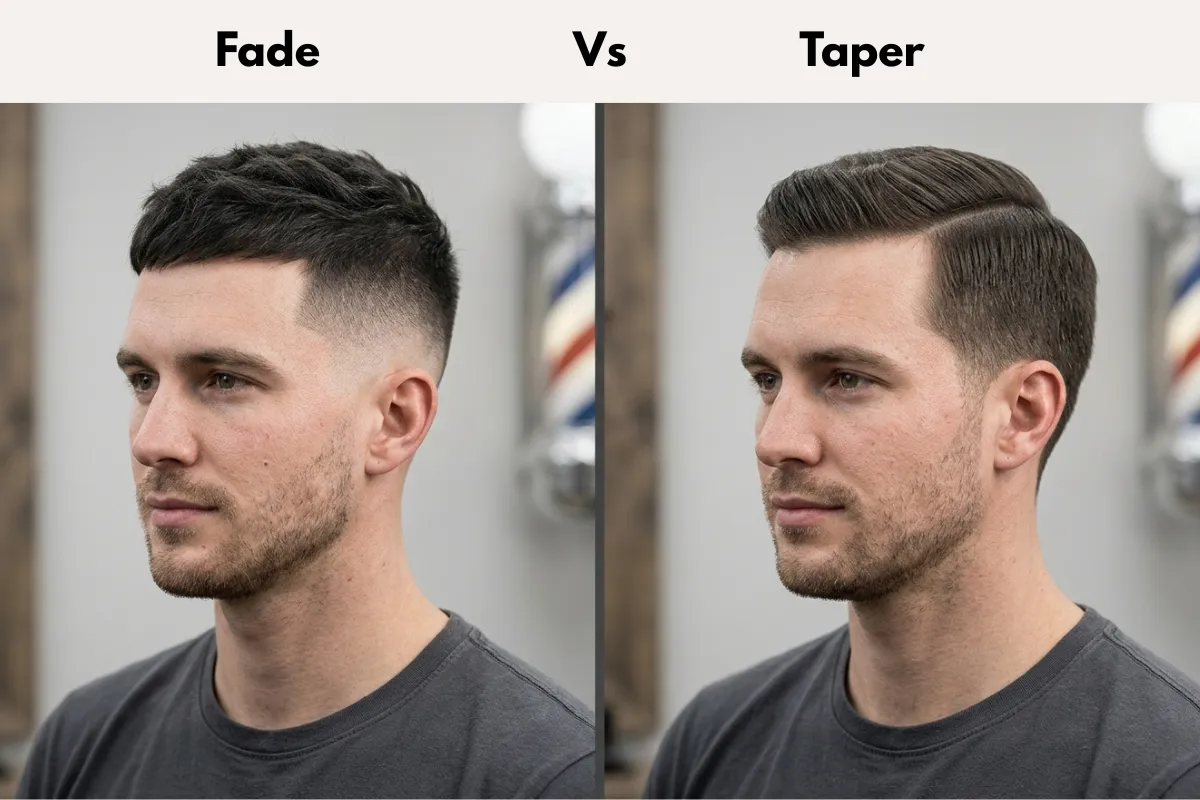

Fade and taper are two popular men’s haircuts that shorten the sides. Although they look alike at first, they differ in blending area, contrast, and overall appearance.
Have you ever asked your barber for a fade and gotten a taper? It happens a lot. The following guide compares the two cuts side by side and explains the main differences. Understanding it helps you choose the right fit based on style, upkeep, workplace, personality, and hair type.
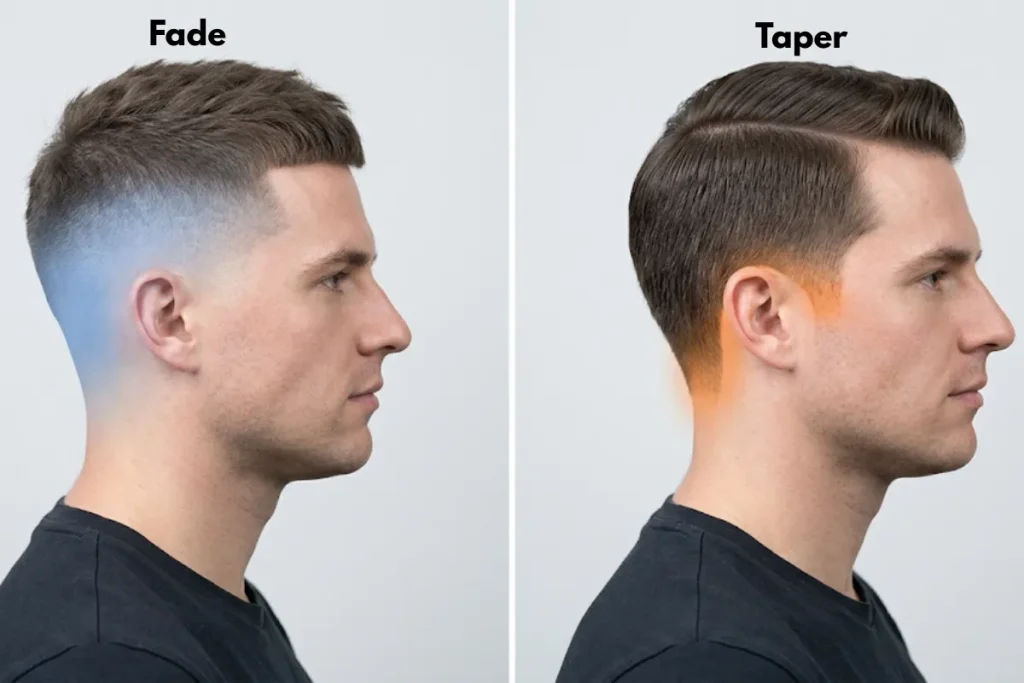
Fade vs Taper At A Glance
Here is a quick table that makes the key differences easy to see before we go deeper.
| Feature | Fade Haircut | Taper Haircut |
| Main Area | Blends the sides and back into shorter lengths | Focuses mainly around temples, sideburns, and neckline |
| Overall Look | Creates a sharper and higher-contrast appearance | Gives a cleaner and more natural finish |
| Hair Removal | Can go down to skin depending on fade type | Usually keeps more hair around the sides |
| Maintenance | Requires more frequent touch-ups to stay sharp | Grows out more naturally |
| Best For | Men wanting a bold modern haircut | Men wanting a subtle professional haircut |
| Popular Styles | Low fade, mid fade, high fade, skin fade | Low taper, high taper, neck taper |
The Real Difference Between Fade And Taper
A fade and a taper differ in a few fundamental ways. You can read our guides on the best fade haircuts for men (internal link) and the best taper haircuts for men (internal link) to learn about each of these cuts in complete detail.
Difference In Coverage And Contrast
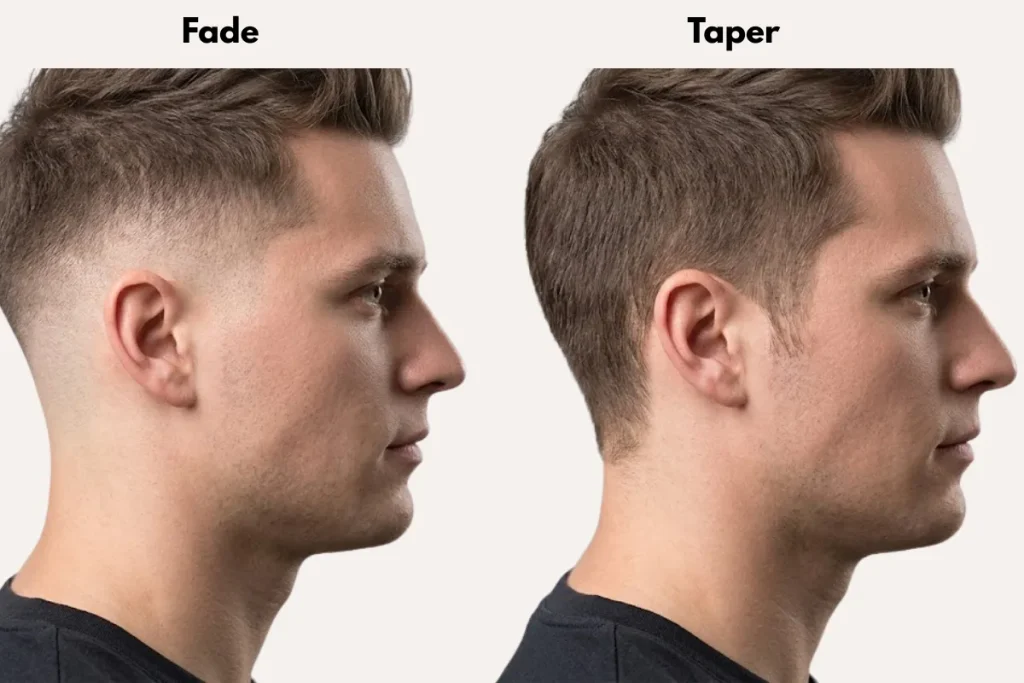
To see the main difference between the two, look at the sides first. A fade blends the sides and back more and can go down to bare skin. On the other hand, a taper keeps more hair around the sideburns and neckline. A fade is a better option for a sharper look.
Difference In Hair Growth And Maintenance
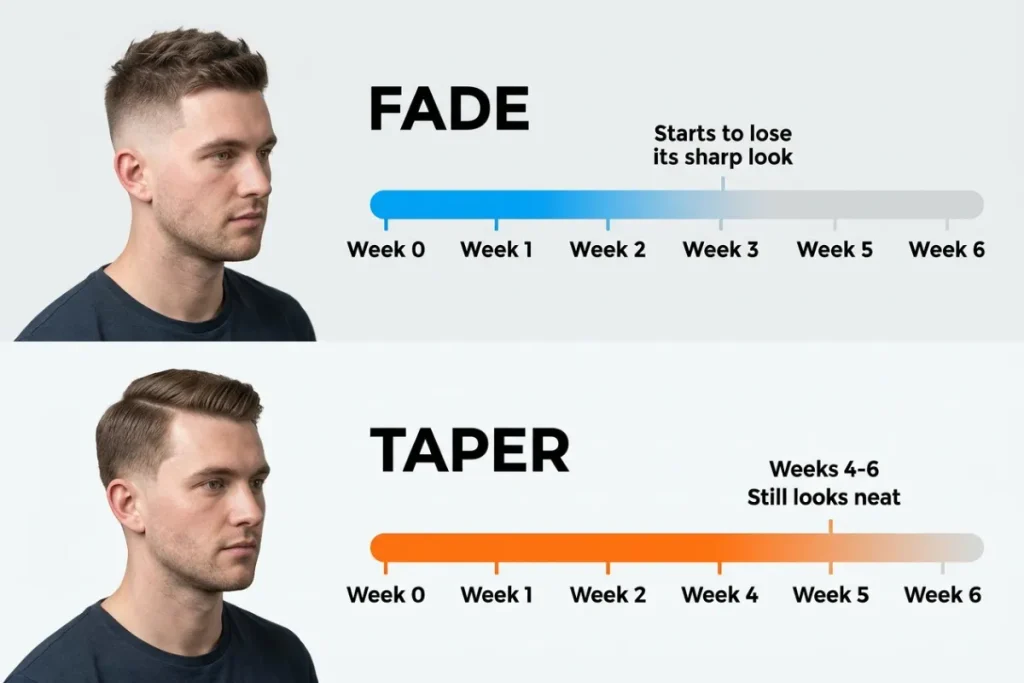
Typically, short hair shows new growth quickly. Many barbers say a fade starts to lose its sharp look after about two to three weeks. In contrast, a taper can stay neat for four to six weeks, depending on how quickly your hair grows.
If you get a fade, discuss and plan your next visit with the barber before you leave the shop. A hair care routine and proper at-home maintenance (internal links) are also essential.
Difference in Overall Style
A taper generally keeps your haircut looking tidy, while a fade gives it a sharper appearance. A taper works well with a side part or a textured top. Contrarily, a fade suits crops, curls, and quiffs because its short sides make the top stand out.
Consider how you want the hair on top before choosing your cut. These unique hair styling techniques (style guide internal link) can help you get the look you want.

Difference in Professional Appearance
Most workplaces accept both haircuts, but a taper is a safer pick for formal offices. A low or mid fade also looks neat in casual workplaces. On the other hand, a high skin fade creates a sharper contrast between the top and sides, so check your workplace rules and read our professional hairstyles guide (internal link) and grooming advice before choosing. If you’re still unsure, start with a taper and try a sharper look later.

Choosing Fade vs Taper Based On Your Needs
Nevertheless, your daily life matters as much as the look you like. So, choose a haircut that fits your lifestyle, personality, and barber schedule, along with your preferred look.
Best Choice For A Bold Look
If you want people to notice your haircut, a fade is a good option. A mid or high fade creates a bigger contrast between the sides and the top. A skin fade keeps the sides very short. It looks good with a textured crop or longer hair on top.
Do you want to know the difference between the three? Check out our low fade vs mid fade vs high fade detailed guide for more ideas.

Best Choice For A Clean Professional Look
At work, the main goal is a neat, professional look, and a taper helps you achieve it easily. You can also choose a low fade for a neat, clean look. A side part or short top works well with both cuts.
You can discover more ideas in our guide on professional haircuts for men. (Internal link)

Best Choice For Low Maintenance
Generally, a taper is easier to maintain because the hair around the edges stays a little longer as it grows. As a barber, I would suggest a low taper if you want a neat look without frequent visits. On the other hand, you may need to visit your barber every two weeks to keep a skin fade looking fresh.
Fade vs Taper for Different Hair Types
Your hair texture can change how a fade or taper looks. Below, you’ll see how each cut suits different hair types.
Straight Hair
Straight hair sits flat, so you can see the haircut lines clearly. A fade gradually gets shorter along the sides and can reach the skin, while a taper leaves more hair around the edges for a softer look. You can ask your barber which fade height suits your hair best.

Curly Hair
Curly hair adds natural volume, so both cuts work well. A fade cuts the sides close, keeping attention on the curls above. In contrast, a taper leaves more hair around the sides, which works well for tight curls. However, tell your barber how your curls look when dry so he can recommend the best cut.

Thick Hair
Thick hair works well with a fade. A fade cuts the sides shorter, so your hair stays close to your head. Contrarily, a taper leaves more hair on the sides, giving your haircut a fuller look.
Pro Tip: If your sides get puffy quickly, a fade can help manage the extra volume.

Thin Hair
Thin hair needs a little extra care, especially with short sides. Very short sides can make thinning hair on top more noticeable, especially with a skin fade. A taper or low fade keeps more hair around the sides and looks softer. You can tell your barber how short you want the sides before you sit in the chair.

Wavy Hair
Wavy hair may spread out at the sides as it gets longer. A fade typically removes that bulk and keeps the shape tight. A taper leaves more hair, so the waves stay fuller and softer. However, before choosing a fade, always consider how much hair you want to keep on the sides.

Fade or Taper Based on Face Shape
Face shape can change how a cut looks, but use it as a guide, not a rule. For more suitability ideas, read our guide to men’s haircuts by face shape. (Internal link)

Oval Face Haircuts
Oval faces have balanced features, so fades and tapers both suit them. A taper keeps things simple and natural, while a fade adds more edge. You can focus on and carry your style without worrying much about your oval face shape.
Round Face Haircuts
A round face looks wider than it is long. Cutting the sides shorter with a high fade can make the top look longer. A taper leaves more hair around the sides, making the haircut look fuller. As a barber, I would suggest a mid fade as a starting point, then go higher if you want more.
Square Face Haircuts
Square faces have a strong jawline and sharp angles. A taper softens the sides, while a low fade helps keep them from looking too wide. Choose a taper for a natural look or a low fade for a cleaner finish.
Long Face Haircuts
A high fade can make your face look longer because it cuts the sides very short. You can keep some hair on the sides with a taper or low fade to balance your face shape. Look in the mirror with your barber and decide together where the blend should start.
Diamond Face Haircuts
A diamond face is widest at the cheekbones, with a narrow forehead and chin. Extra hair around the sides of a taper can soften your cheekbones. A low or mid fade can work too if you keep some fullness on top.
Pro Tip: Get started with a softer look and go shorter later.
Fade vs Taper Haircut: Which One Should You Get?
You can use the tables below to match your goals with the right cut. They make the final choice quick and simple.
Choose A Fade If You Want More Contrast
| Your Goal | Best Pick | Why It Works |
| A bold, sharp look | Mid or high fade | The short sides make the top stand out. |
| The sharpest finish | Skin fade | The blend ends at bare skin. |
| A little edge, not too much | Low fade | The shorter hair starts near your ears and neckline. |
Choose A Taper If You Want A Natural Finish
| Your Goal | Best Pick | What You Get |
| A tidy, classic look | Low taper | Only the edges get shorter. |
| A softer grow-out | Taper | The change in length is small. |
| A neat look for formal work | Taper | The finish is calm and simple. |
Consider Your Styling Routine
| Your Routine | Best Pick | How It Helps |
| Barber visits every 2–3 weeks. | Fade | You can keep the sharp line fresh. |
| Barber visit once a month or less | Taper | It still looks neat as it grows. |
| Little time to style | Taper or low fade | Softer contrast needs less upkeep. |
| Love a styled, bold top | Fade | Short sides frame the top. |
What To Tell Your Barber Before Your Cut?
A clear request helps your barber get the cut right the first time. You only need to mention a few details.
Explain Your Desired Level of Contrast.
You can use words like “light,” “medium,” or “strong” to explain what you want. You can tell your barber whether you want the hair shaved down to the skin or a little left at the bottom. This helps your barber understand the haircut you want.
Mention the Fade or Taper Area.
Guide your barber by telling him where the short part should start.
- A low fade stays close to the bottom of your head, a mid fade reaches the temple area, and a high fade begins farther up the sides.
- For a taper, you can say you want just the sideburns and neckline cleaned up. You can also tell your barber how much length you want to keep on top.
Show a Reference Picture
As a barber, I recommend you bring a photo along, because a picture can say more than a long explanation. You can choose a photo of someone whose hair looks close to yours in thickness and texture. That way, the result will match what you want. If possible, share pictures of the sides and top with your barber.
Final Thoughts
A fade makes a bold statement, while a taper gives you a softer look. Your style, schedule, and hair type can help you decide which one to try. Give your choice a full month to see how it fits your daily life, or decide if it is time for a change.
FAQs
The following quick questions and answers will help you understand the difference between a fade and a taper.
Are Tapers The Same As Fades?
No, a taper shortens hair gently at the edges, while a fade blends over more of the sides and can reach bare skin.
What Looks Better, Taper Or Fade?
Normally, both can look great. It depends on your taste. A fade gives you a sharper look, while a taper has a softer finish.
What Lasts Longer, A Fade or a Taper?
A taper can keep its shape for around 4 to 6 weeks, while a fade may need a touch-up after 2 to 3 weeks.
Does A Taper Count As A Fade?
Not exactly, but a taper fade mixes both, and many people use the two words loosely.
How Do I Ask for a Taper Cut?
Whenever you ask your barber for a taper, explain how short you want the hair around your neck and sideburns. Also, tell him how short or long you want the top to be.
Which Type of Fade Is Better?
It is generally up to you because a low fade is subtle, a mid fade is balanced, a high fade is bold, and a skin fade is the sharpest.
Should I Get a Taper or Burst Fade?
You should choose a taper for a simple, natural finish, or a burst fade that curves around the ear for a more shaped, stylish look.